Changes in the manufacturing sector are placing new demands on leadership
The workforce in the sector has become increasingly diverse. The proportion of women has grown, particularly in expert roles, and the industry employs a wide range of employees with international backgrounds.
Work disability in the manufactoring sector
Work disability trends in the manufactoring sector, 2021–2025

Work-related strain and resource factors
Physical workload
Manufactorin work involves several aspects of physical workload that may increase the risk of work disability. Key physical workload factors include:
- heavy manual lifting and carrying
- repetitive movements
- prolonged periods of standing or sitting
- vibration caused by tools or machinery
Most physical workload factors in manufactoring work can be anticipated and managed with appropriate methods. Effective work ability management can make a significant difference.
Vocational rehabilitation is an effective way to prevent work disability
Vocational rehabilitation often produces good outcomes in the manufactoring sector.Early timing is one of the most important factors predicting successful rehabilitation.
Approximately 70% of vocational rehabilitation periods related to musculoskeletal disorders and mental health end successfully.
(Source: Elo data 2023–2025).
Reduced recovery from work is an early signal of overload and potential risks to work ability. These risks are further amplified when there are shortcomings in the smoothness of workflow.
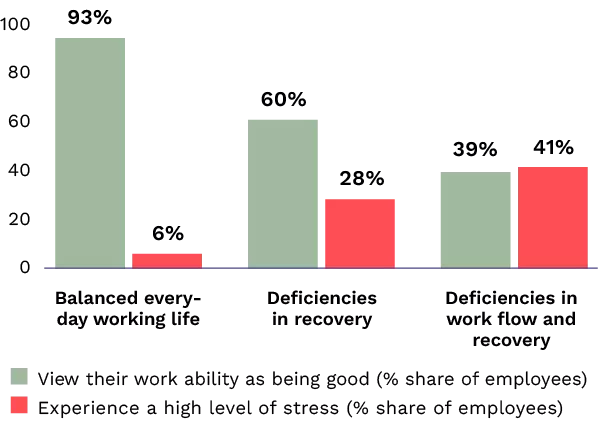
Monitoring mental workload is more often seen as an area for improvement in small enterprises
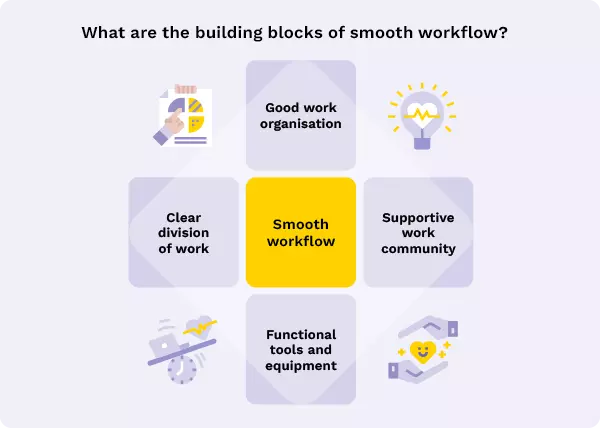
Key phenomena and trends in the manufacturing sector
Key trends in the industrial sector include:
- technological transformation
- the impact of hybrid and remote work on a sense of community
- the growing importance of competence management
- increasing diversity in work communities
Recommendation willingness (eNPS) in the industrial sector
Employees’ experiences of having influence over their work, feeling valued, and receiving support for their competence development are clearly reflected in eNPS results in the industrial sector.
Employee Net Promoter Score (eNPS) improves when employees feel valued, have opportunities to influence their work, and are able to develop their skills.